CCUS Cluster Workshop 2026
60+ participants from across the CCUS value chain gathered in Oslo for the National CCUS Cluster Workshop on the 19th January.
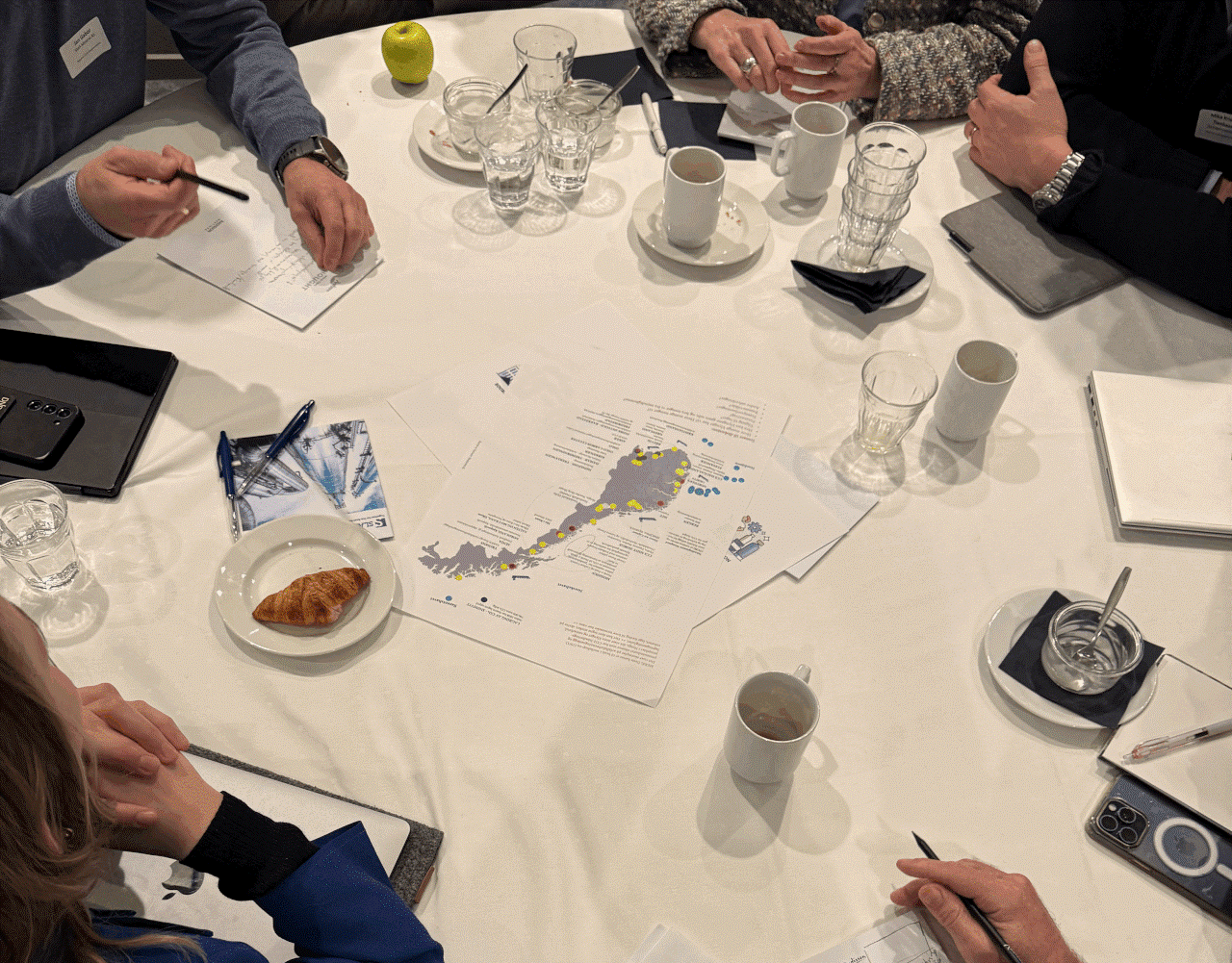
Photo by Camilla Brox of people sitting around the table and discussing the realities of Carbon Capture Utilization and Storage in Norway while looking at a worksheet showing the map of Norway.
The event was co-hosted by CCUS Norway and Oslo Carbon Cluster with support from CLIMIT.
👂We heard from CO2 Logistikk Nord, CCUS Mid Norway, CCS Haugalandet, KAN/Returkraft, Borg CO2 and Oslo Carbon Cluster alongside perspectives from investors Bellona and the Norwegian Ministry of Energy.
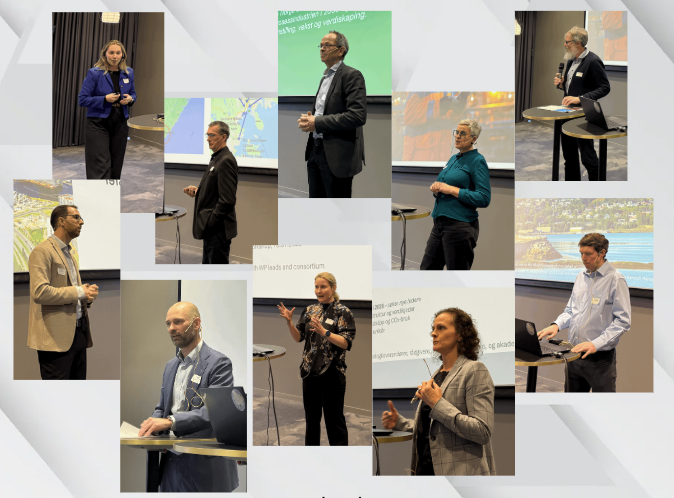
A composite of photos by Camilla Brox - showing various representatives of CCUS Norway members giving presentations.
👥It was a full day of learning, dialogue, and shared experience.
Across regions, Norway’s CCUS landscape is highly diverse — with different emitters, geographical conditions, and levels of project maturity.
Yet many of the challenges are shared: cost-intensive capture and transport, access to storage, and the need for predictable framework conditions.
What investors need to see
The investor panel with HitecVision, Obligo, and Verdane delivered a clear and honest assessment:
• Transport and storage remain the largest sources of risk
• Carbon credit markets (EU ETS and voluntary markets) are important but not yet predictable
• Costs must come down across the value chain — particularly for transport and interim storage
• Stable, long-term support schemes are essential before large-scale capital can enter
• Clearer timelines, permitting processes, and ETS signals are needed for investment decisions
Their message was consistent:
👉 Reduce uncertainty, strengthen the business case — and capital will follow.
What participants aligned on:
Across the group discussions, five key themes emerged-
🔹 An evolving value chain
Many emitters, long distances, and varied logistics make coordination challenging. Capture and transport remain the most cost-intensive elements.
🔹Strong need for risk reduction
Participants highlighted state guarantees, OPEX support, and risk-sharing models that reduce the burden on the state while making investments viable.
🔹 A key role for clusters
Clusters can help reduce costs, share best practices, improve public acceptance, and align industry recommendations to government.
A recurring question: What can clusters solve — and what must authorities solve?
🔹Frameworks and new instruments
Predictable framework conditions are critical.
Enova will outline new support mechanisms during 2026 and invited input to ensure they target real opportunities.
CCUS Norway will establish a Forum for Regulatory Guidance & Support to help coordinate industry signals.
🔹Storage & CO2 markets
Access to storage capacity remains critical.
Rules for carbon credits — both EU and voluntary — will strongly influence future financing.
The underlying question remains: who pays?
CCUS Innovation membership: What’s coming in 2026
Through CCUS Innovation, CCUS Norway will support members across the full CCUS value chain — from emissions and capture to transport, storage, and emerging CO2 markets.
Activities for 2026 include:
• Establishment of thematic forums (with opportunities for members to lead)
• Regular webinars and workshops (reach out if your organisation would like to present)
• Study trip
• National and EU-level CCUS events and knowledge arenas
Big thanks to:
Camilla Brox - Markus Sebastian Hole - Jannicke Gerner Bjerkås - Alexander Engh - Ragnhild Skagestad - Nils Håvard Giskeødegård - Karoline Sjøen Andersen - Ketil Bergmann - Lars Petter Maltby - Guro Nereng - Tore Hansen - Eva K Halland - Eivind Berstad
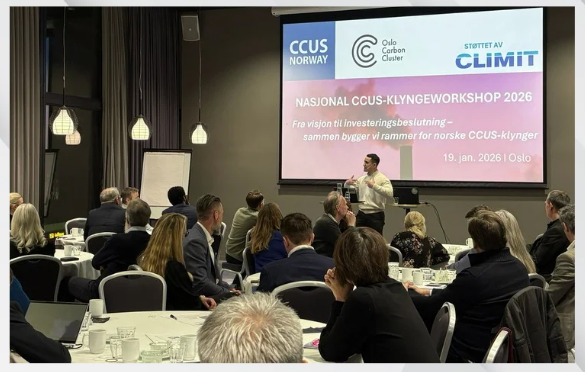
Photo by Ambre Bossez
👉 Not a member yet? Join us and help shape Norway’s CCUS future.
Contact Marton for more information - marton.volstad@carbonlimits.no
👉 Already a member? Thank you — and consider leading a Forum within:
Infrastructure & Value Chain • Emissions & CO2 Use • Regulatory Guidance & Support